Stereotype fact-check: It can feel manageable to envision review spammers as random people wasting their free time by writing malicious content about local businesses like yours or those of your clients, but the reality is that review fraud is increasingly stemming from lucrative global operations.
Review fraud farms are organized business entities, frequently located in what are sometimes termed “developing countries” that lack strong anti-fraud laws.
At their very worst, these entities are engaged in human trafficking and slavery, as in the case of this Myanmar scam center which authorities estimate may hold as many as 100,000 enslaved people. Some 7,000 enslaved people were rescued from such an operation in 2025.
But another very common scenario involves free people being contacted by fraud-based brands and coached to write fake reviews as an income stream, as recently documented by an undercover reporter from The Guardian.
Your local business or digital marketing agency needs to understand the nature and scale of the review fraud crisis as your first line of defense against it, and today we’ll look at this serious problem and what you can do about it.
An insider’s view of review fraud farms
Here is a summary of Guardian reporter Jasper Jolly’s experience of working for a review fraud farm as research for his column:
- Jolly was contacted via a messaging app by someone with a name that was likely a pseudonym and a photo that looks like a real person, but may well be a stolen or AI-generated image, with an offer of up to £800 a day in exchange for writing reviews of real businesses he had never patronized.
- After being recruited by this first contact, he was then turned over to a “receptionist” whose name was also likely fictional, and whose image was found to be in use on adult-content websites. This “person” coached him in the process of creating a crypto wallet so that he could be paid in US dollars.
- In the article, fraud consultant Serpil Hall states, “When it comes to scams, they are getting very crafty…Especially with AI, generative AI and now agentic AI.”
- The fraud-based brand was impersonating a legitimate business called Quad Marketing Agency, which is currently investigating the matter. The scam version of the business has over 16,000 subscribers, revealing what The Guardian terms the “industrial scale of the operation”.
- Jolly began by being paid $5 per fake review, but then was pressured by the organization to pay in his own money with the promise of being returned a larger sum as a commission. This is how review fraud farms victimize not just the consumers who encounter their spam content, but also the reviewers they are “employing”.
Finally, when Jolly revealed to his coach that he is a reporter and asked “her” if she was in danger in any way, he received the reply “Ha? I am always safe”. When asked to reveal their own identity, the coach stated that this was an invasion of privacy and communications ceased.
A recent study by The Transparency Company (now part of GatherUp) found that nearly 14% of the 73 million reviews they examined on Google Business Profiles were extremely suspicious and likely fake. AI is making it easier by the day to fake both identities and content.
In sum, there are huge amounts of money to be made in review fraud, and increasingly-sophisticated entities are profiting from weak national and international laws and insufficient digital review platform safeguards.
How review fraud farms undermine trust
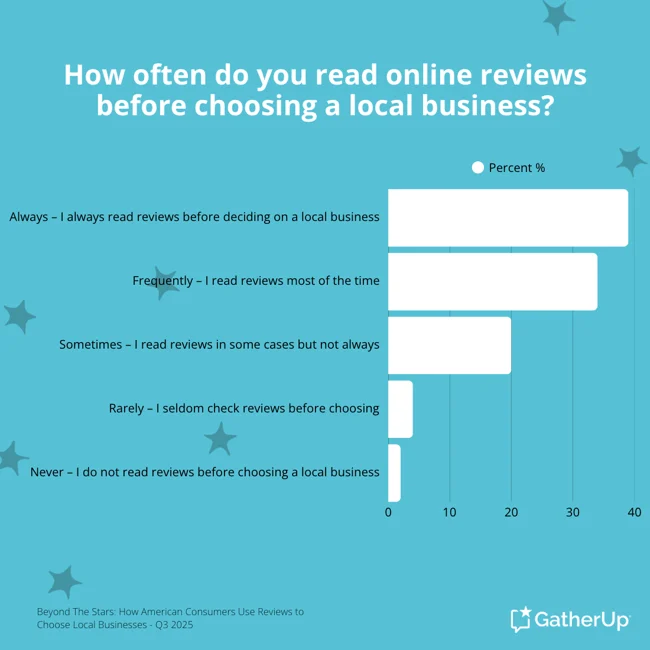
98% of US consumers consult local business reviews prior to making local transactions. 94% place at least some degree of trust in this content. It is hard to come up with an example of any other form of online content that is more widely read or relied upon than reviews on platforms like Google Business Profiles/Google Maps.
Entities like Google are dependent on consumers interacting with review content, and have serious cause to be concerned by GatherUp’s findings that only 20% of the public are confident that review platforms are doing a good job filtering out review fraud. In an article touting the powers of its AI, Google states that it removed 240 million policy-violating reviews between 2024 and 2025 – a figure that reveals the outrageous scale of review spam. While this number may sound impressive, GatherUp finds that consumers are suffering an estimated $300 billion in annual financial harm in just the home services, legal, and medical sectors due to review fraud.
Local consumers lose trust when fake positive reviews lead to transactions with scammers. Review platforms lose trust when the public comes to associate them with the publication of fraudulent content. And, finally, local businesses lose out on reputation, rankings, online engagement, conversions, transactions, and revenue when they are forced to compete with brands that are paying review fraud farms to create an uneven playing field in local towns and cities. Awareness of this reality is the first step, but there is more you can do to protect your brand or the local business clients your agency serves.
Understanding and acting on the degree of review fraud in your geographic markets
Gatherup’s proprietary YOY surveys find that, for US-based consumers, Google is the most-trusted and most-used local business review platform. Unfortunately, multiple independent studies have concluded that Google is overwhelmed by the degree of review fraud in its system, and despite their efforts to filter out spam, too much of it is sitting live on Google Business Profiles and Maps listings and feeding their AI products with fraudulent information.
This dilemma necessitates a dual protection plan for local brands like yours of those of your agency’s clients:
Part 1: Self-monitoring
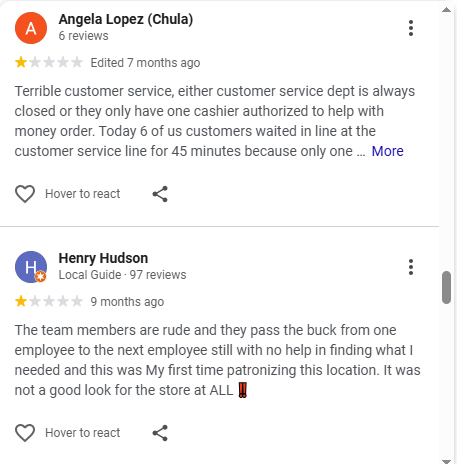
You must constantly monitor your own listings for signs that a competitor may be paying a review fraud farm to sabotage your profiles. This is a completely separate task from the necessary work of identifying and responding to legitimate negative reviews from real customers.
Warning signs of review farm fraud include:
- Either a sudden or gradual increase in low-star reviews or ratings from accounts with
- Few other reviews attached to the reviewer profile
- Multiple reviews of brands in your industry across a wide geographic area (like a single profile reviewing 100 car dealerships across the US)
- Legitimate-looking personal names that do not match the names of patients or clients of your practice/firm/organization; note: unfortunately, Google’s recent decision to allow reviewers to use screen names has made this step of spam detection more difficult for business owners
- Either a gradual or sudden increase in legitimate-looking reviews with a star rating that is slightly lower than your average star rating; the goal of this tactic is to erode your rating over time, and with it, your rankings in favor of a competitor
- Language that seems overly formal or robotic, perhaps indicating that the review content was generated by AI instead of written by an actual human being; unfortunately, Google is now encouraging legitimate reviewers to use AI to write their reviews, again making detection of this warning sign more difficult for local brands
- Reviews that urge the public to avoid your brand while naming a competitor brand consumers should patronize, instead
- Negative reviews followed by direct outreach from an extortionist, demanding money from the business to have the reviews removed; note, extortion can now be reported to Google via this process.
Any review that is not left by an actual customer of your business reflecting a genuine experience falls afoul of Google’s Prohibited and restricted guidelines, meaning that it is eligible for reporting. Google offers this workflow for reporting suspicious reviews, but does not guarantee removal.
Part 2: Competitive monitoring
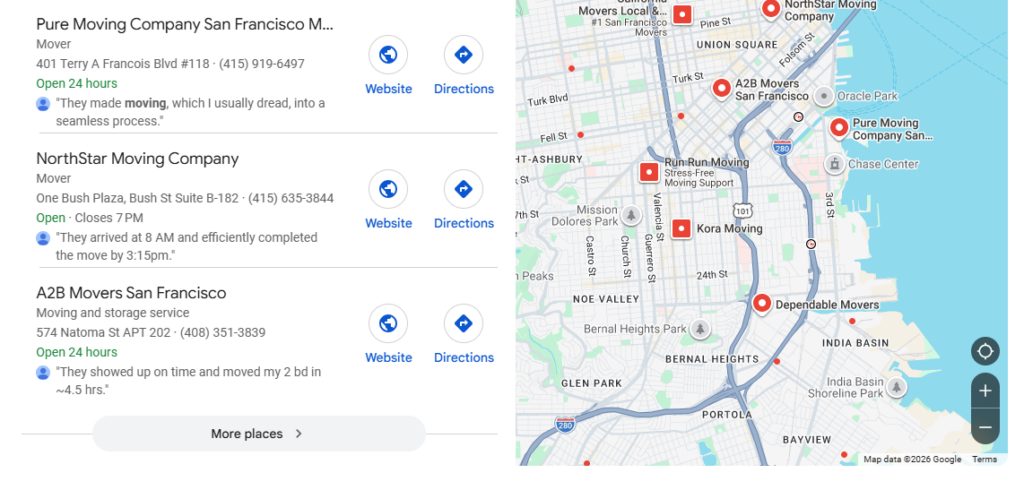
Each location of a business exists within a geographic market of local competitors. Unfortunately, it is no longer enough to simply monitor your own profiles or those of your clients for signs that they have been targeted by a review fraud farm. You must now practice constant vigilance to discover whether fraudsters have been hired to elevate particular competitors by exploiting signals in Google’s system such as average star rating, review recency, review velocity, review count, and review content.
Warning signs that a competitor has engaged a review farm fraud include:
- A review count that is suspiciously higher than the average review volume of most local competitors
- A review velocity that seems greater than would be normal for a typical business in its geography
- Reviews stemming from profiles that have only left a small handful of reviews
- Reviews stemming from profiles that have reviewed multiple businesses within the same industry across a wide geographic region, including both national and internationally-located businesses
- Review profiles featuring reviews that contain the same or near-identical language for every business that has been reviewed
- Review language that seems overly formal or robotic, suggesting it may have been generated by AI
- Review profiles that only leave perfect 5-star reviews
- Business profiles that contain only 5-star reviews
- Reviews for a business that is not legitimately located at the location marked on the map
If you believe that one or more competitors have hired a review fraud farm to distort your local commercial playing field, we have a free tutorial on the 7-step process for documenting and reporting competitors’ fake reviews to Google.
However, news reporting, industry and consumer studies all indicate that the scale of review fraud is quickly rendering manual monitoring processes inefficient.
Anyone marketing a local business should know how to spot the common warning signs of fraud, but the industrial scope of the problem necessitates the use of tools for automating both detection and reporting, including auto-disputing competitor reviews.
GatherUp takes review fraud seriously and our Review Defense software not only detects suspicious reviews across brand profiles, but also enables you to continuously monitor up to 15 local competitors for signs of review fraud. This offering makes both monitoring and reporting review spam scalable for multi-location brands and digital marketing agencies. In an ideal world, platforms like Google would be catching and filtering out all attempted review fraud in your markets, but few brands can afford to sacrifice visibility, profitability, and consumer trust to wishful thinking.
Run a free review fraud scan and book a strategy call with GatherUp’s experts now. What you learn about the degree of review spam may surprise you, but more importantly, it will empower you to protect your brand and your clients from significant losses due to unmanaged fraud.
Already know your market is being overrun with fake reviews? Request a demo of Review Defense today.