If reviews are currently sitting in a de-prioritized corner of your local search marketing strategy, reading this blog post could lead to significant improvements in reputation, rankings, and revenue. Whether you are marketing a small business, a multi-location franchise, retail chain, major health care provider, or a service area business in a category like home services, reviews aren’t just nice to have – they are your trust engine, driving profitability and brand longevity.
Is your agency striving to earn more client buy-in for a professional reputation management strategy? Share these stats from GatherUp’s survey of 1,000+ US consumers:
- 98% of consumers read reviews before choosing a local business for a transaction; what other form of content can compete with the scope of this readership?
- 94% of consumers place some level of trust in review content; trust is the gateway to building consumer-brand relationships
- 55% of consumers trust what their peers say in reviews over anything brands can say about themselves; reviews provide signals of authenticity and proof that a community is actively patronizing a local business
While the simplest tip for earning more reviews is to improve customer service (rewarding excellent consumer experiences is the #1 reason people write reviews), brands in competitive local markets typically need to go beyond this to achieve their maximum potential. Whether you’re marketing your own business or the companies of your clients, this article will teach you how to earn more high-quality reviews and includes a checklist that you can share with staff, teams, and stakeholders.
Why reviews matter now
Reviews contribute to earning sales in three distinct ways.
- Visibility
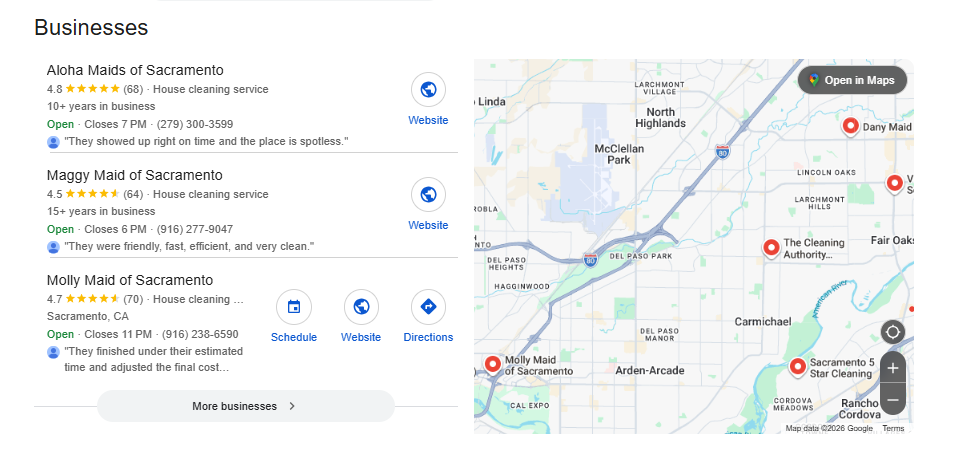
Reviews directly impact your online visibility, both in traditional local search results, like Google’s local packs and Google Maps:
And, now, in AI-generated results like Google’s AI Mode tool:
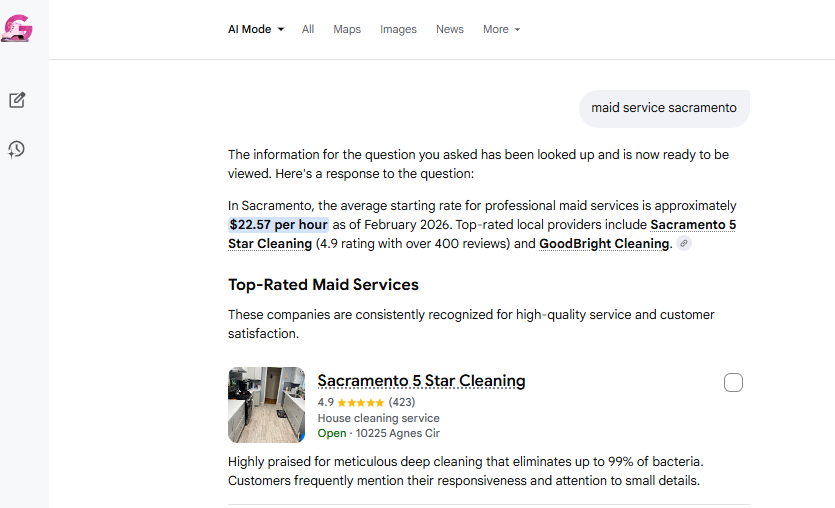
According to Whitespark’s annual Local Search Ranking Factors survey of the world’s most respected local search experts, 4 of the top 20 influences on local pack/Maps rankings relate to reviews. These are:
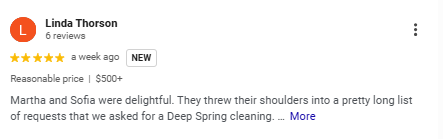
The overall star rating of the business you’re marketing, which is an average of all the ratings that have been received over time, like this 4.8 rating, shown above.
Google review volume, which is the total number of reviews received over time. The above business has amassed 283 reviews since it created its Google Business Profile (GBP).
Review recency – a metric that measures how fresh review content is. The above business last received a review one week ago, and this matters, because most recent reviews are the reputation content consumers consider the most important when they are choosing a local business for a transaction.
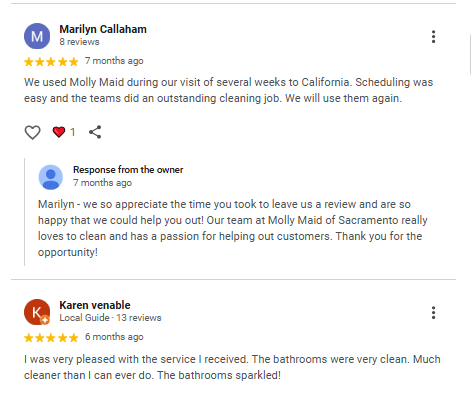
Sustained influx of reviews over time, meaning that a business is earning a steady stream of fresh reviews, instead of suddenly getting tons of reviews all at once (an indicator that the company might be engaging in suspicious and spammy review tactics). A profile like the above shows that a brand is receiving some reviews each month, rather than receiving all of its reviews in strange-looking bursts.
All four of these signals contribute to a brand being visible in Google’s local results so that it can be discovered by nearby consumers.
- Conversion
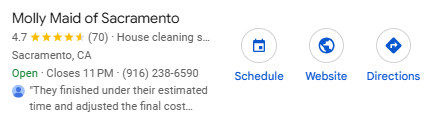
When your review signals look good to consumers, it positively impacts your conversions (potential customers taking a specific desired second action). Conversions cover a wide range of actions, including clicking on elements of a Google Business Profile to schedule an appointment, visit your website, request driving directions, phone a location, fill out a form, sign up for a newsletter, make a purchase, and many other important activities.
A core reason for investing in professional reputation management is to improve your review metrics to persuade the maximum number of searchers to convert.
- Competitive Proof
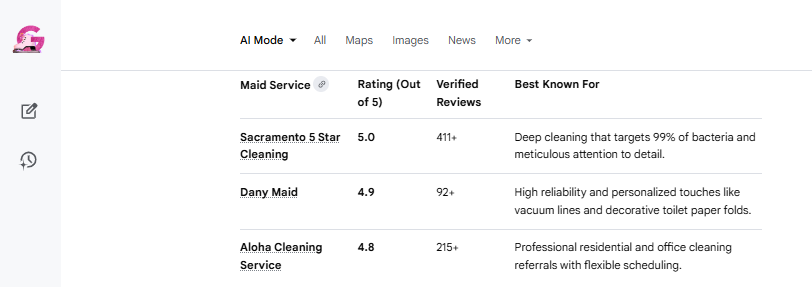
Unless the business you’re marketing is literally the only game in town, the influence of your reputation exists within a competitive framework. These days, consumers can even use conversational AI tools to generate a table like the above comparing the ratings and review volumes of multiple local competitors. Which of the above businesses would you choose?
No single review signal will make you the top competitor in a specific geographic market. Instead, multiple signals must be cultivated on an ongoing basis for the business to meet its goals. For best outcomes, a professional, always-on review acquisition and management solution must be implemented.
The best moments to ask
It’s typical for businesses to focus lots of attention on how they word review requests, but it’s actually discovering ideal timing that can really move the needle for a brand you’re marketing. This will differ from industry to industry. For example, a chain of coffee shops may find that asking for reviews in person at the time of service yields the highest return, while a hotel franchise can discover that if it waits a week after guests have settled back in at home from a vacation, it will receive more responses to its review requests.
Bearing in mind that ideal timing will be unique to your industry and field, here is a general overview of consumers’ review request timing preferences:
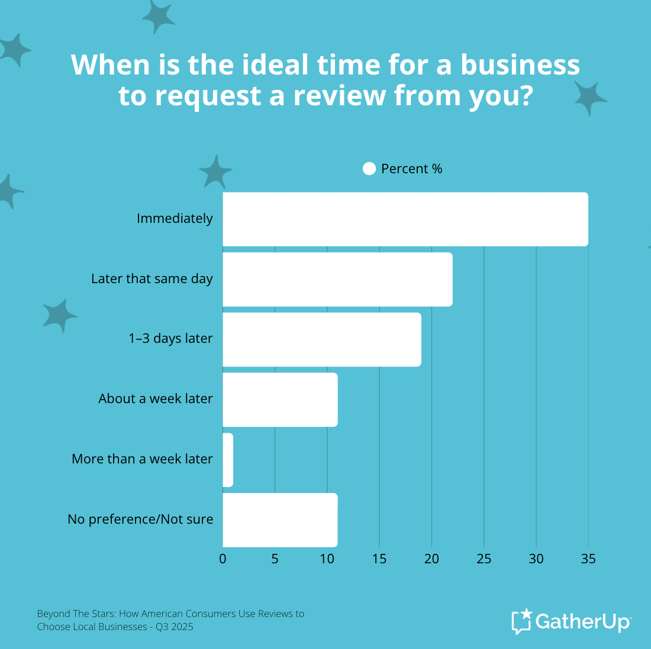
As you can see from the above chart, consumers generally prefer to be asked for reviews immediately at the time of service, later that same day, or within 1-3 days.
The beauty of taking an organized, professional approach to reputation management is that you can run month-over-month tests to discover ideal review timing for each brand and community. Request a demo from GatherUp to see how we can help you gain insight into the best moments to ask for reviews to maximize your ROI.
Pick the right channel
As with review request timing, review request methodology influences outcomes. GatherUp’s research captures how widely preferred request methodologies can vary:
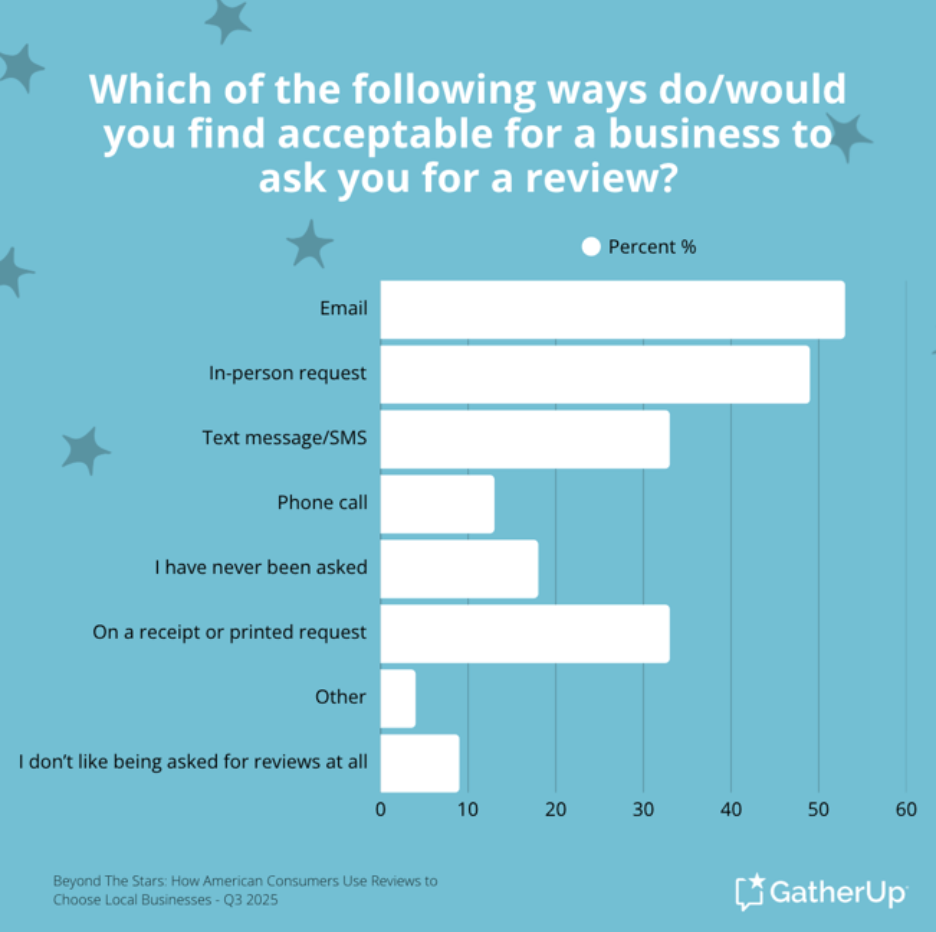
While data like the above indicates that many consumers are comfortable with being asked for feedback across a variety of channels, brands may see best results by tying different methodologies to different parts of consumer journeys relative to different industries.
For example, placing QR codes on the menus at your fast food franchise can spark awareness that all customers are welcome to review you. Meanwhile, texting a review request within 1-3 days of solving a plumbing emergency can invite a grateful customer to leave feedback now that their household is back in working order. Or, a contractor firm might wait until a large deck building project is completed before sending a personalized email asking for a review from a client with whom they’ve come to have a relationship with over the course of weeks or months.
Again, having a professional system for requesting reviews and tracking outcomes will enable your brand or agency to discover the channels that deliver the best rate of return.
The review engine workflow
Keep this simple workflow in mind:
Ask → Remind → Respond → Learn
Begin by asking for reviews in person or collecting email/SMS contact information to send a request. If you don’t receive a response within 1-2 weeks, it’s perfectly fine to send a reminder; the top reason consumers don’t write more reviews is because they simply forget to, making your reminder helpful. Respond to all reviews you receive with thanks for praise and with an offer to make things right for the customer when they have a complaint. Finally, view all review metrics and content as a priceless data set designed to help brands learn how to increase consumer satisfaction; what you learn will directly impact your bottom line and longevity.
Make it scalable for multi-location brands
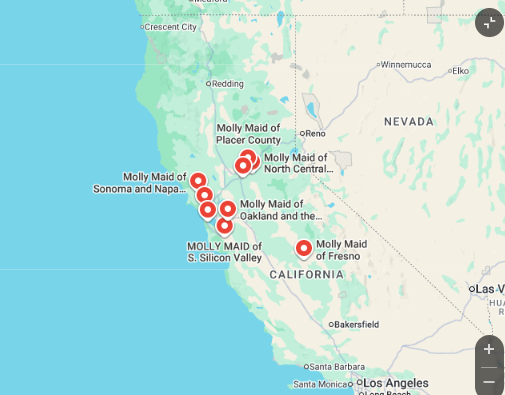
While it’s possible to manage all aspects of reviews manually for a single-location business, it is neither efficient nor convenient. And when managing the reputation of chains, franchises, and multiple agency clients, success depends on being able to scale three key aspects of this vital work:
- Establishing a consistent brand voice
The overall reputation of a brand depends on consumers across all markets experiencing a reliable, excellent level of customer service. Regardless of whether a patron is in Portland, Oregon or Portland, Maine, they should be able to expect to be treated with the same thought and care.
The task of scaling review requests and review responses is made so much easier when franchisees and branch managers are given the tools they need to represent brand voice consistently. With GatherUp, company leadership or marketing partners can templatize both request and response content, making it available to location-level stakeholders to create repeatable successes and trustworthy consumer experiences. These templates can be manually customized for each unique scenario, and can utilize AI for assistance and inspiration.
- Location-level ownership
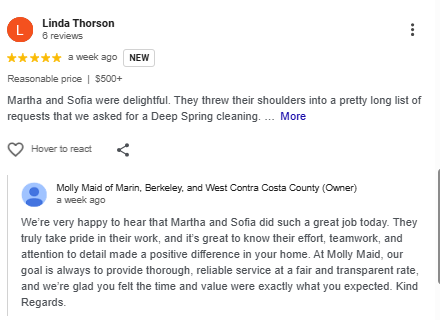
Local expertise is probably the most overlooked asset that chains and franchises have at their disposal. Branch managers, franchisees, and their staff have invaluable knowledge about the preferences, customs, and character of the communities they serve. This specialized knowledge can do wonders for customizing both review request and response language with the goal of building long-lasting local relationships and earning repeat business and referrals.
With GatherUp, sophisticated access permissions empower branch managers and franchisees to contribute to their marketing by accessing the aspects of reputation management that relate to their locations. Your brand’s overall reputation is the sum of the reputations of all your locations. Enable stakeholders to create company-wide success.
- Centralized reporting
Keep leadership, stakeholders, and clients engaged in the necessary work of reputation management by providing proofs of growth with centralized reporting. Track overall performance as well as metrics at a location level, whether you’re marketing just a couple of locations or hundreds of them. With the right tools, proving the value of reputation management is practical and easy.
What to avoid
A professional reputation management solution provides an immediate morale booster in that it puts an end to the rote work of having to copy/paste review request and response content. Templates and simple workflows in your dashboard make tasks like these incredibly fast.
But before you begin making the most of your reputation, there are a few things you need to avoid to prevent negative outcomes:
- Never pressure customers to leave a review. Consumers can report your business to Google if they feel strong-armed. Never insist that customers leave a review, and never demand that they leave a positive review. Your Google Business Profile could be suspended.
- Never incentivize reviews. Don’t offer money, discounts, coupons, freebies, or any other kind of gift in exchange for a review and never work with any third party that incentives review content. The public can report your business to Google for such behavior, which is forbidden by Google’s Prohibited and restricted guidelines and illegal in many nations. You could face both profile and account level suspensions as well as litigation
- Never review your own business or have family or present/past employees do so. Reviews should only be written by customers. Engaging in review fraud is illegal in many nations, and can result in litigation and heavy fines.
- Never set up a review kiosk at your locations or post reviews on behalf of customers. The former can look like spam to Google because multiple reviews are emanating from the same IP address, and the latter falls afoul of Google’s guidelines. Reviews must be left directly by customers on their own devices.
- Never engage in “review gating”. This is the practice of programmatically funnelling happy customers towards leaving a review while routing unhappy customers in a different direction. Review gating is specifically cited as a violation of FTC rulings on review fraud.
- Never neglect reviews. Your star ratings, conversions, and sales will quickly erode if your brand fails to take an active approach to review responses. Given the influence of reviews, every happy customer deserves your thanks for helping you market your business, while every negative reviewer is owed your quick response for remediation. Skilled responses can win back unhappy patrons and even inspire them to update their ratings and reviews to reflect a better subsequent experience with your brand, but neglected negative reviews can lead to business closure over time.
- Never overlook your learnings. Professional reputation management should build institutional knowledge about how and when customers want to be asked for feedback and how your business can best respond to complaints. One of the key benefits of investing in this form of marketing is that it should lead not just to more reviews, but to better reviews as you learn to request sentiment that yields highly detailed responses from consumers. Detailed responses are then featured in both Google Business Profile and AI-generated content in answer to different searches and prompts. Pay attention to what you learn across time from your review management dashboard.
Bring it all together: A checklist for getting started with professional reputation management
- Share this article with all stakeholders, including company leadership, marketing teams, branch managers, and franchisees to get on the same page about the vital role reputation management plays in real-world business outcomes.
- Do an audit of the following review metrics for each branch of your business: average star rating, review volume, review recency, and review velocity.
- If you’d like a preview of the difference a professional reputation management solution can make to your brand or clients, start your free 14-day trial of GatherUp here.
- If you’d prefer a live, one-on-one demo of GatherUp’s world-class reputation management solutions, book it now.
- Once your dashboard is up and running, you can immediately begin creating templates for both review requests and owner responses.
- After about a month, you will be able to start seeing the return on your investment, tracking outcomes of your requests via an organized, multi-seat dashboard.
- Make the most of dashboard views and reporting to learn what request methodologies, timing, and responses have the best rate of return for your brand. Set quarterly benchmarks to study outcomes and then use that knowledge to benefit all branches of the business.
Without a professional solution, scaling reputation management is chaotic. With GatherUp, workflows, templates, and intuitive reporting create processes that run themselves under your organization’s thoughtful stewardship. Tasks that drained time can be managed with a couple of clicks and all players are empowered to contribute to the development of a reputation that is trusted by consumers and highly visible online.
Have questions? Please ask, and expect helpful answers from GatherUp. Your ideal reputation awaits.