Any expansion of your digital marketing agency’s service menu represents a risk, but there’s a difference between a smart, strategic move and a wild leap of faith.
Promethean Research’s 2025 Digital Agency Industry Report finds that 84% of agencies now identify as specialists, indicating that generalist positioning is no longer common. Yet, too narrow a focus can create stagnation. In the year leading up this report, brands that added new client services enjoyed 9.7% growth, vs. just 1.1% growth for agencies that remained the same. Promethean Research summarizes:
“Agencies that adapt their offerings, sharpen their positioning, and build repeatable revenue engines are pulling ahead, while those standing still fall behind.”

Given this industry trend, GatherUp partnered with Promethean Research to investigate the risks and rewards for agencies like yours of adding reputation management as a new managed client service. Read the full report here, and read on for highlights you can share with decision-makers at your brand.
A low-cost, low-risk add-on with compounding ROI
Let’s begin with implementation costs and then look at profit potentials.
Your investment
Promethean finds that expanding client services to include reputation management via a partnership with a brand like GatherUp carries a minimal setup cost with a median of $200-$500. Ongoing cost typically comes in at <$50 per month per client. The latter figure can, of course, be substantially upsold to your clients as part of your expanded digital marketing packages.
Your return
Promethean offers this profit forecast based on four different agency scenarios:
- Baseline case
The following chart represents a 3-year forecast for an agency that doesn’t implement reputation management as a new client service.
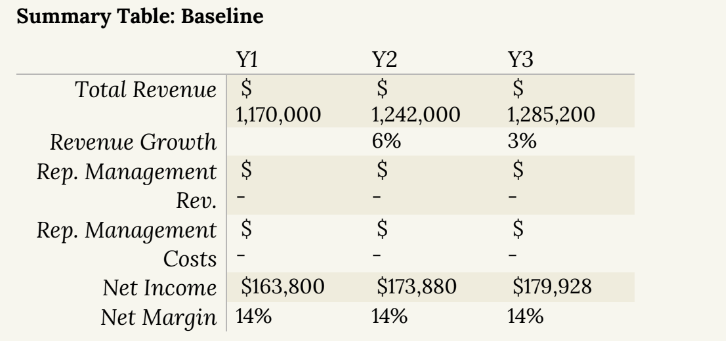
In the Baseline scenario, Promethean assumes industry average annual growth (slightly above stagnation), reflecting churn offsetting new client adds, and maintaining a 14% net margin. By Year 3, revenue creaks up to only \$1.03M and net income is \$144k.
- Baseline with added client services
The following chart represents an agency that adds reputation management services via a partnership with a brand like GatherUp:
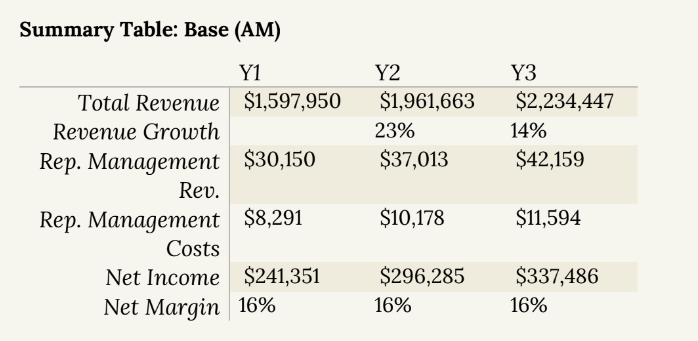
Promethean finds that the introduction of reputation management yields a step-change in Year 1 due to upselling a portion of existing clients, and a higher ongoing growth from new clients adopting the service. Annual growth is boosted significantly over the baseline due to the additional reputation management revenue, better client retention, and additional cross-sell/upsell revenue. Given the minimal costs associated with launching the service, the ROI is strong.
- Upside scenario
The following chart forecasts profit potentials if the rollout of new services goes very well:

If your agency does an excellent job of attaching at least 50% of clients, wins a high rate of retention and is effective at cross-selling the new service, Promethean predicts exceptional growth vs. the baseline case. Net margin improves further, yielding $1.3M in cumulative net income over three years (154% increase over Baseline).
- Downside scenario
The following chart represents a case in which your new program underperforms:
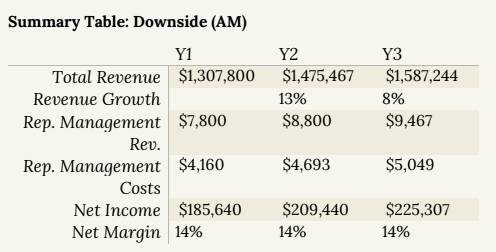
What happens if only a few of your clients attach, or your agency struggles to sell the added services to new clients and no improved client retention rate materializes? Promethean still forecasts a slight growth effect. Revenue in Year 3 is $1.6M, which is a meaningful increase over Baseline, but well below the other two agency-managed scenarios. Net margin stays at 14%, indicating that the program at least breaks even. Importantly, even this “failure” scenario still isn’t disastrous; the agency still benefits, or at worst, treads water with some extra revenue covering its costs. The downside risk appears low in financial terms, provided the agency doesn’t over-invest in something that clients don’t adopt.
Summing up the forecast
Promethean Research’s final assessment is that the agency-managed approach is a high-upside, low-downside proposition. Financially, the base and upside scenarios show substantial gains, and even the downside scenario likely results in at least a small positive impact (or worst case, a neutral impact) on profits.
Taken in conjunction with the low cost of implementation, operational execution is within reach for small, medium and large agencies. It also represents an investment opportunity that is one of the easier “sells” in the digital market arena, as we’ll explore next.
Seizing the Upside Scenario Opportunity

As you’ve just seen in the charts, the better a rollout of new reputation management services goes for your agency, the greater your ROI should be. So much of success comes down to telling the right story to existing and incoming clients about the benefits they’ll experience, and frankly, some services are very hard to sell. They’re nuanced, vague, complicated. You see clients’ eyes start to glaze over as you try to communicate value.
Fortunately, reputation management is almost in a category by itself when it comes to ease of promotion. Even least-tech-savvy local business owners arrive with an inherent understanding of what a five-star rating system is, and how they need to have a good reputation in their community to succeed. They simply need to be coached in translating their hard work offline into online metrics that drive discovery, conversions, and sales.
Given this, GatherUp wants to help you tell the best possible story with data your clients can quickly and easily relate to, and our friends at Whitespark have just released the latest edition of their annual Local Search Ranking Factors report to help us all out. This respected publication surveys over 40 of the world’s most recognized local search experts (full disclosure: I’m one of them!) to discover which factors are driving local and organic search visibility. The 2026 report added a new category of questions to capture influences on the hot topic of AI visibility.
Here are statistics to build into client storytelling to demonstrate the value of reputation management with the goal of increasing attach rates and retention.
- Reviews as a local search ranking factor

When it comes to influencing rankings in local packs like the above, the world’s top local SEO experts say that review signals make up an incredibly strong 20% of the picture. This includes metrics like high numerical Google ratings, quantity of native Google reviews with text, review recency, a sustained influx of reviews over time, keywords in native Google reviews, quantity of native textless Google ratings, positive sentiment in review text, quantity of reviews with photos and more.
Every one of these factors can be impacted by an active reputation management program, making it surprisingly easy to communicate value to both existing and incoming clients when you add this service to your offerings.
- Reviews as an organic search ranking factor
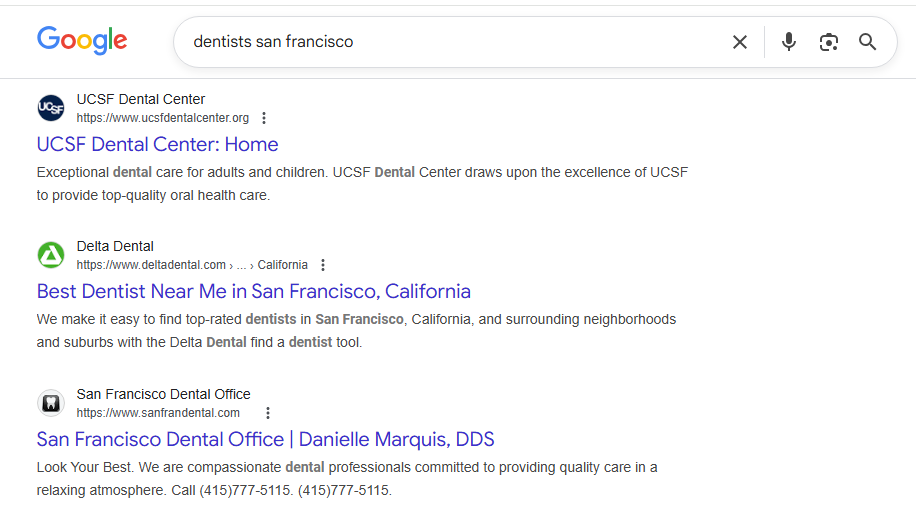
Unsurprisingly, experts say that review signals are just 6% of the overall picture of what influences organic rank when users search for something like “dentists san francisco”. However, in competitive markets, that 6% difference should be seized by any of your clients who need to explore every avenue in order to develop a dominant online presence in their geographic markets.
Some of the factors to consider in this organic scenario include “freshness of content across entire website” – a professional reputation management program will include the embedding of first-party reviews on client websites, providing one of the easiest and most natural methodologies for keeping content fresh. Another factor is “quantity of third-party unstructured reviews”, which you can coach clients to earn from hyperlocal and industry blogs, local online news, local lifestyle magazines, etc. High numerical Google ratings also form part of the scenario, as do high numerical third-party ratings.
By partnering with GatherUp, and bringing our proprietary ongoing research with you into your client meetings, you can increase client retention by being continuously up-to-date on emergent reputation management tactics that are influencing organic search visibility.
- Reviews as an AI search visibility factor
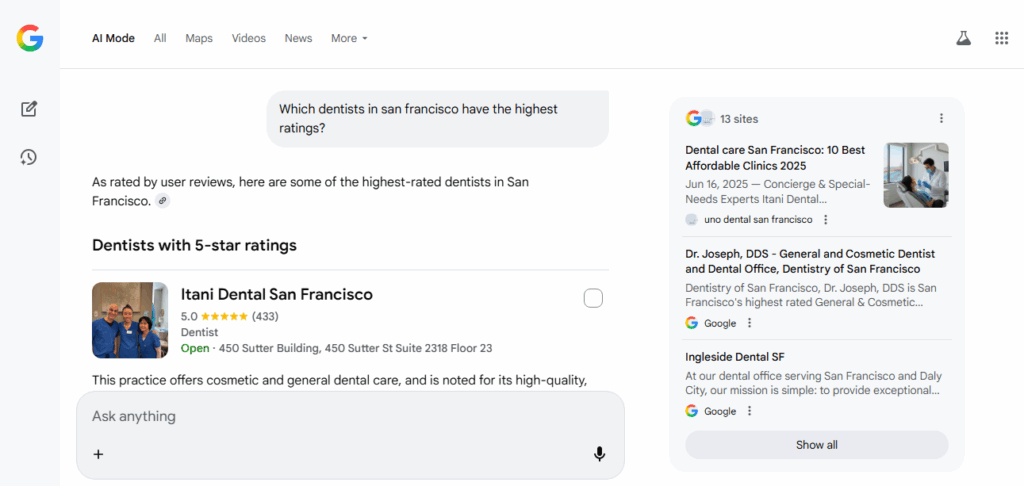
We wouldn’t be surprised if your agency is fielding a ton of client questions right now about the role of AI in the overall digital marketing picture. It’s highly worth noting that local SEO experts have found that review signals have the second-greatest influence on AI search visibility after on-page signals. Reviews are playing a major role in discoverability and conversions when users turn to conversational AI products like Google AI Mode and Chat GPT, and local SEO experts place their influence at 16%.
Factors in this category include high numerical Google ratings, diversity of third-party sites on which reviews are present, quantity of third-party unstructured reviews, quantity of reviews on industry-specific sites, quantity of traditional third-party reviews, positive sentiment in review text, quantity of native Google reviews with text, and more.
All of these components deserve professional solutions, making reputation management services a strong choice for clients who want to be sure they are early winners in the emergent AI scenario.
Next steps to growth in 2026
Since its founding in 2013, GatherUp has become one of the most trusted reputation management solutions on the market. If you’re tired of the struggle of communicating the value of upsold and cross-sold services to clients, a much easier win could be just one demo away. Sign up today for a one-on-one walkthrough of how GatherUp is helping agencies like yours achieve low-risk, high-ROI victories.
Want more data forecasts on your agency’s profit potentials? Download Evaluating the ROI of Agency-Managed Reputation Management for Digital Agencies.