Key takeaways
- Look at restaurant review sites the way you look at everything else in your restaurant – by how they bring in business.
- Google comes first. It’s where diners start, and it pulls details from your reviews and photos into Maps and AI answers.
- Pick 1 or 2 more sites based on where your diners actually are. For many US restaurants that’s Yelp, which now feeds reviews into ChatGPT.
- There’s a long tail of review sites. It’s okay to focus on the big ones and let a good review strategy do the rest.
Table of Contents
Most restaurant owners are thinking about one thing: how to drive business.
So that’s the same lens you should be using on your review sites. Which of these are bringing people through your door? Which ones do diners in your niche, your region or your city use most?
There’s a long tail of review sites, and it’s easy to get overwhelmed by all the options. Our recommendation is to focus on the big ones. A good review strategy will help drive impact on the sites your diners use most.
How do you know which review sites matter for your restaurant?
You find out which review sites matter for your restaurant by asking your guests, checking where your reviews already land, and searching for yourself the way a diner would.
Ask your guests. It’s easy to have your host make small talk when people come in. “How did you hear about us? Is this your first time? We’re happy to have you.” A host who’s curious about guests learns a lot in a week.
Check where you already have reviews. If you’re showing up consistently on certain sites – getting reviews, getting photos, feedback coming in – those are your sites. Then look at the long tail. Sometimes one person went to a small site and left one 1-star, and suddenly that’s your only review there. That’s worth knowing about.
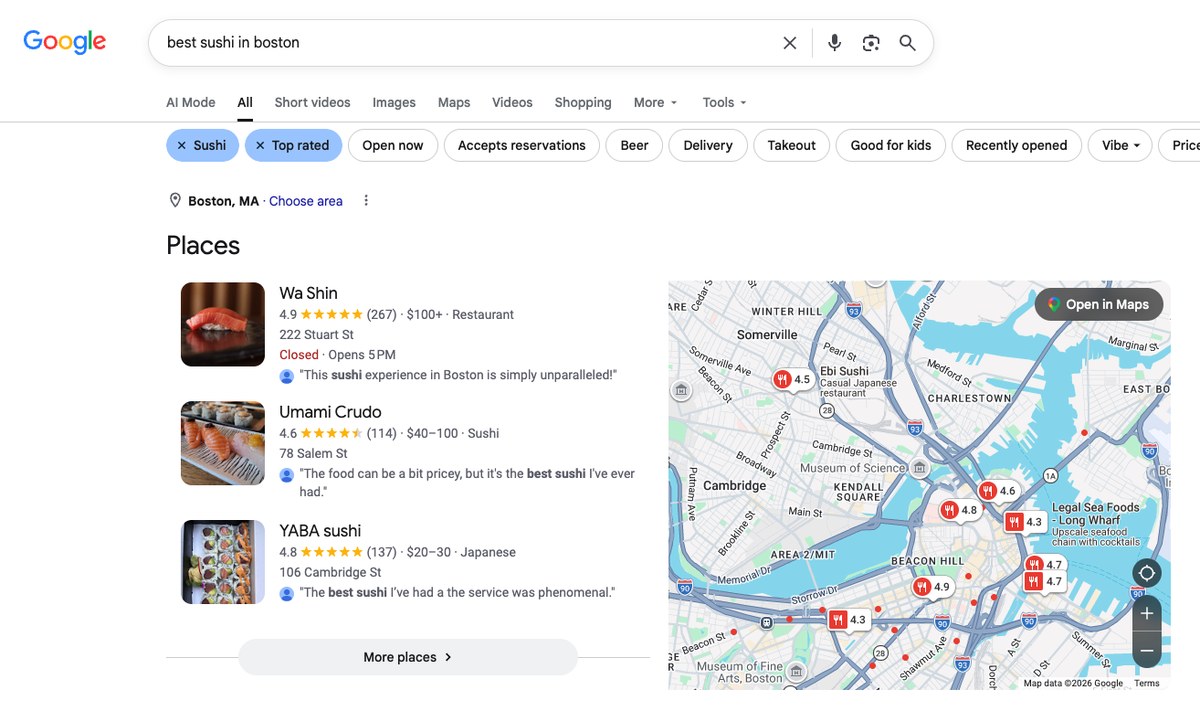
Search like a diner. Look yourself up in Google, in Google Maps, or have a friend do it. See what pops up, and be aware of what your business looks like on these sites.
Which restaurant review sites matter most in 2026?
For most restaurants, the review sites that matter most in 2026 are Google first, then Yelp, Tripadvisor or OpenTable depending on who your diners are.
When US diners research a restaurant, 56% use Google Search and 24% use Yelp (Nielsen for Reputation, 2025). In our Beyond the Stars research, Google was the most trusted review platform (50%) and the one people write reviews on most (68%).
AI answers follow the same pattern. In a June 2026 study of 10,000 US restaurants, 48.6% of Google AI Overview citations came from Google’s own listings and 14.1% came from Yelp (Local Falcon, 2026).
| Site | Who it matters for | Why it matters | Can you reply? |
|---|---|---|---|
| Every restaurant | Where diners start, and the biggest source for Google’s AI answers | Yes, publicly | |
| Yelp | Most US restaurants, especially in cities | 24% of diners research here, and Yelp now licenses its reviews to ChatGPT | Yes, publicly or privately |
| Tripadvisor | Tourist areas and destination dining | Travelers plan here, and AI assistants cite it often | Yes |
| OpenTable / Resy | Restaurants where guests book ahead | Reviews come from guests who actually dined | Yes, publicly or privately |
| Facebook / Instagram | Everyone, lightly | Word of mouth and recommendations from friends | Yes |
Older lists include sites like Gayot and Foursquare. That’s the long tail. Check them once with the lonely 1-star in mind, then spend your weekly time on the sites above.
Why does every restaurant need to run its Google profile?
Google is still our top recommendation. It’s on our phones, it’s where we search, it’s how we’re getting directions. Most people start there or end there.
It also does more with your reviews than any other site. Google allows more data aggregation than a simple review site that says, here’s a list of reviews and here’s your 4.4 rating.
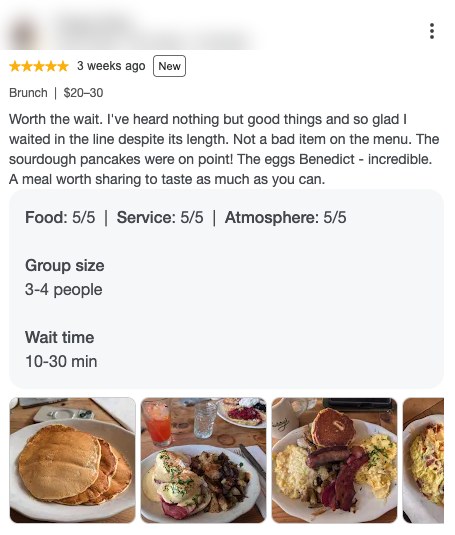
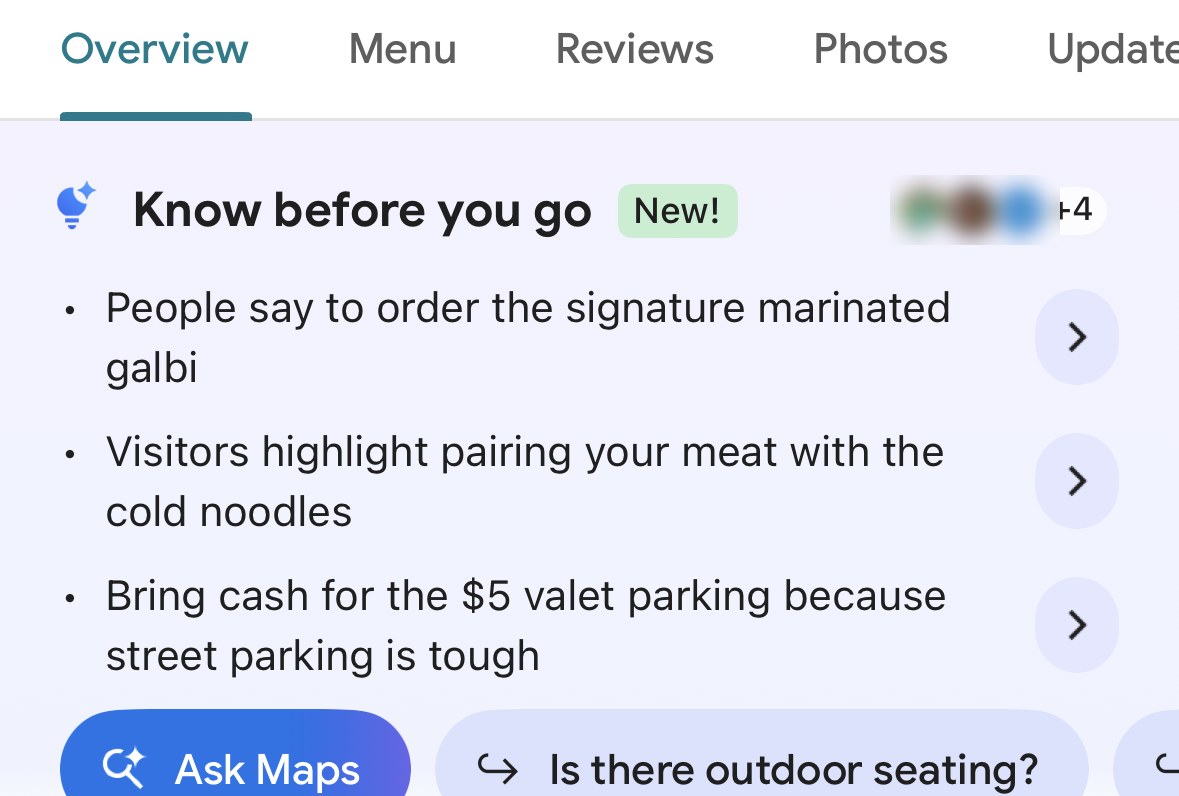
Say a guest writes that the tiramisu is to die for. Google can surface that in Ask Maps, its Gemini-powered way to ask questions in Google Maps (launched March 2026), and in the new “Know before you go” tips at the top of your Maps profile. Your reviews are writing your description for you.
Photos matter just as much. Show off your menu. Show off that delicious tiramisu. Share the specials for the week with a photo, and people will see it – and so will Google.
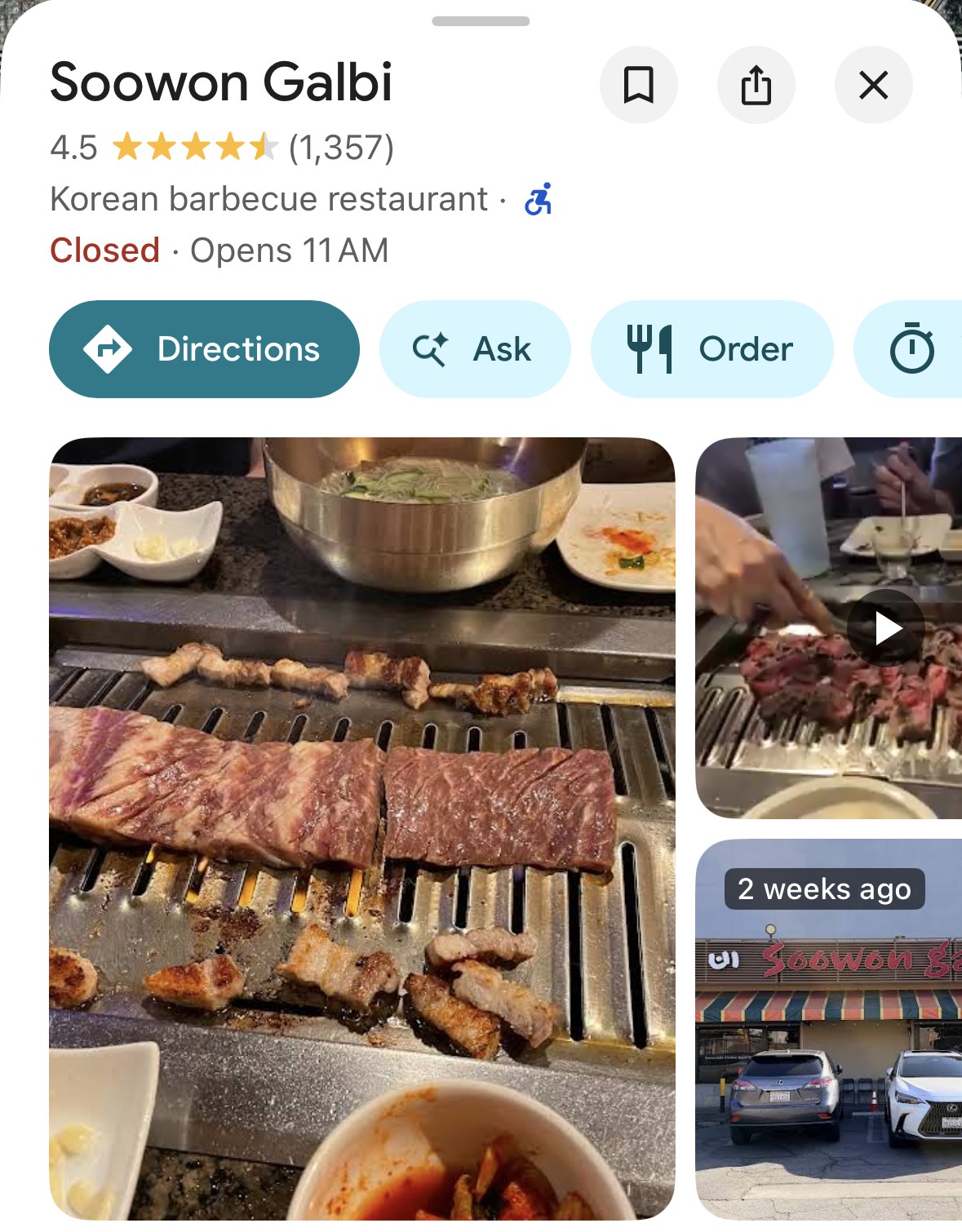
In one study of AI restaurant picks, the restaurants named most often had a median of about 3,979 Google photos, compared with 1,044 for restaurants named only once (Pluspoint, 2026).
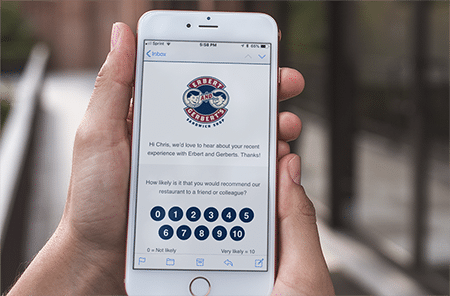
And ask for reviews. A good review request strategy is important for Google as well as the other sites. 77% of consumers prefer a review request within 3 days of their visit, and 82% prefer businesses that respond to reviews (Beyond the Stars, 2025). Our post on how restaurants can get more reviews has the playbook.
Where does Yelp fit now that it feeds ChatGPT?
Yelp matters more in 2026 because people are moving from asking a search engine their questions to asking AI tools like ChatGPT – and Yelp now supplies ChatGPT with local business information.
In July 2026, Yelp signed a deal licensing its reviews, ratings and photos to OpenAI for ChatGPT’s local answers (MarTech, 2026). When someone asks ChatGPT where to eat, your Yelp page can be part of the answer.
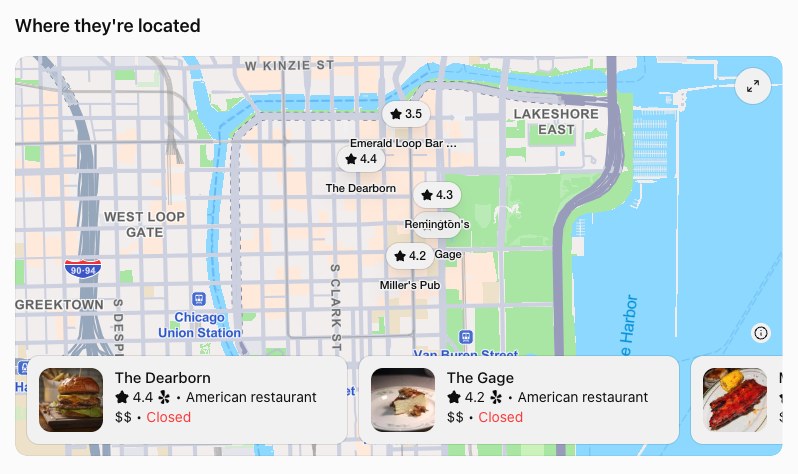
Yelp doesn’t allow businesses to ask for reviews. But keeping your business information up to date – menu, photos, what have you – makes Yelp a place people will check for your business. Expect some reviews to sit in Yelp’s filter, too. About 70% of reviews posted in 2025 were “recommended” (Yelp, 2026).
A few others are worth a look, depending on your restaurant:
- Tripadvisor. If you’re near a beach, a ballpark or a downtown hotel strip, this may be your second site. Here’s how to get more reviews on Tripadvisor.
- OpenTable or Resy. If guests book ahead, these reviews come from people who actually ate with you. You can reply publicly or privately.
- Facebook. Keep it claimed and current. It’s where friends recommend places to each other.
How do AI assistants like ChatGPT pick restaurants?
AI assistants like ChatGPT pick restaurants from the same review sites and listings your diners use, plus places like Reddit and food guides such as The Infatuation.
Diners mostly take the answer at face value. In our research, 48% of consumers have used ChatGPT or a similar tool, and only 33% always check the sources the AI cites (Beyond the Stars, 2025).
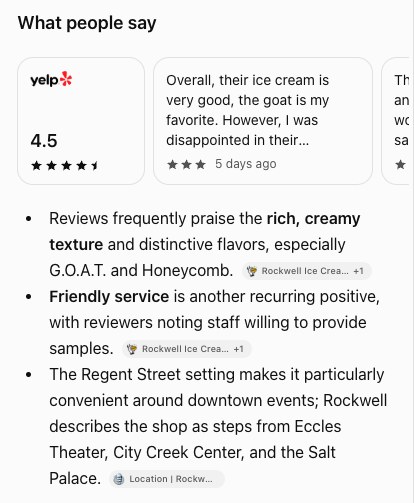
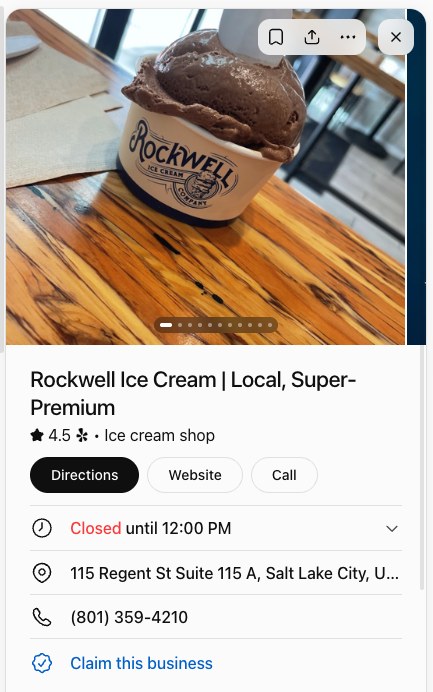
ChatGPT reads your reviews for the details, the same way Google does. For one Salt Lake City ice cream shop, it pulls in the Yelp rating and sums up what reviewers say: the rich, creamy texture, the G.O.A.T. flavor, and staff who are happy to hand out samples.
Reddit threads and food critics are out of your hands. Your review response strategy is something you can own. Steady reviews, current photos and real replies on Google and Yelp give AI more to work with every time someone asks. More on that in reviews as evidence for AI search.
Should you claim your restaurant on ChatGPT?
Yes – if ChatGPT already lists your restaurant, claim it. It’s free, and it puts you in charge of the basics ChatGPT shows about you.
OpenAI opened Business Hub in November 2026. You find your business at chatgpt.com/business-hub, prove you own it by business phone, email or website, and verify your identity. Then you can update your description, website, contact info, logo and cover photo (OpenAI).
Two things to know. Restaurants can only claim a listing ChatGPT already has, and some owners are landing on a waitlist. And claiming doesn’t move you up – OpenAI says it doesn’t change how often you’re recommended. Check every detail before you submit, because a published profile can’t be deleted.
Paid ads are separate. ChatGPT Ads opened to US businesses in 2026, and OpenAI says ads don’t influence ChatGPT’s answers. For most independents, claim your profile, keep Google and Yelp strong, and treat ads as optional.
What about DoorDash, Uber Eats and Grubhub?
Delivery apps like DoorDash, Uber Eats and Grubhub have reviews too, but those reviews stay inside the app. Only people who ordered can leave one, you often can only reply privately, and they rarely show up in Google or AI answers.
Aim to give your delivery customers a great experience. They can be part of your review request strategy too – a card in the bag that says “Loved it? Tell us on Google” goes a long way.
Delivery apps operate differently, and they deserve their own strategy. This post is about the diners who walk in your door.
Do restaurants need to worry about fake reviews?
Restaurants get a lot of reviews, and that’s good news. Food is personal, so diners can be more forgiving of a 1-star, especially when you reply.
The best protection is making sure you’re getting real reviews from customers, and that customers have an opportunity to talk about their experience so it’s visible to other folks. That also keeps you on the right side of the FTC’s Consumer Review Rule, which bans buying reviews and offering perks only for positive ones, with penalties up to $53,088 per violation (JD Supra, 2026).
The reviews worth worrying about are the ones that aren’t real: someone who never ate with you, a burst of 1-stars overnight, a complaint about a dish you don’t serve. Those break the platforms’ rules, and you can dispute them. That’s what Review Defense does for you.
And the Transparency Certificate shows diners and AI that your reviews come from real customers.
What should a restaurant owner do this week?
Pick the review sites that bring people through your door, and do them well. Here’s where to start:
- Ask your guests. Have your host make small talk at the door: “How did you hear about us? Is this your first time?”
- Search like a diner. Look yourself up in Google and Google Maps, or have a friend do it.
- Check where your reviews already land. And look for the lonely 1-star on a small site.
- Make Google look like your restaurant. Photos of the menu, the specials and that tiramisu. Current hours and details.
- Keep Yelp current. Menu, photos and info, so it’s a place people check for your business.
- Claim your restaurant on ChatGPT at chatgpt.com/business-hub (and on Google, if you haven’t).
- Own your review responses. Reply to every review on your focus sites, the good ones and the 1-stars.
Focus your review requests on the few sites that bring diners through your door. Then let GatherUp keep an eye on the rest.
GatherUp sends review requests by text and email to the sites you choose. It also monitors your reviews across the long tail of sites, so you know what’s happening everywhere – including that lonely 1-star on a site you’d never think to check.
You reply from one inbox, and Review Defense and the Transparency Certificate protect the reviews you’ve earned. Book a demo and we’ll look at your review sites with you.
Restaurant review sites FAQ
What is the most popular restaurant review site?
Google. 56% of US diners research restaurants on Google Search (Nielsen for Reputation, 2025), and Google is the most trusted (50%) and most-used (68%) platform for writing reviews (Beyond the Stars, 2025).
Is Yelp still important for restaurants in 2026?
Yes, for most US restaurants. 24% of diners research restaurants on Yelp, and since July 2026 Yelp licenses its reviews, ratings and photos to OpenAI for ChatGPT’s local answers.
How do I get my restaurant recommended by ChatGPT?
You can claim your listing for free at chatgpt.com/business-hub, but claiming doesn’t guarantee a recommendation. ChatGPT draws on sources like Google, Yelp, Tripadvisor and Reddit, so current listings, photos and steady recent reviews on those sites are what feed it.
Should I respond to every restaurant review?
On your focus sites, yes. 82% of consumers prefer businesses that respond to reviews, and 58% of negative reviewers expect a reply within 3 days (Beyond the Stars, 2025).
Can I ask for or incentivize restaurant reviews?
You can ask for reviews on Google, but not on Yelp, which doesn’t allow it. And never offer perks only for positive reviews. The FTC’s Consumer Review Rule bans that, with penalties up to $53,088 per violation.