From a local business marketing perspective, the best thing about AI is the speed with which it picks up your new content. By contrast, Google search indexing has become painfully slow for many brands, with some of your digital assets taking weeks or months to appear in traditional search results, or even never getting indexed at all!
This dynamic of fast AI vs. slow search visibility is one you can make the most of right now for the upcoming holiday shopping season. Here are 7 data-backed tactics for building brand fame in AI search over the next couple of months so that local consumers can find you when you are offering what they want.
1) Diversify your review requests
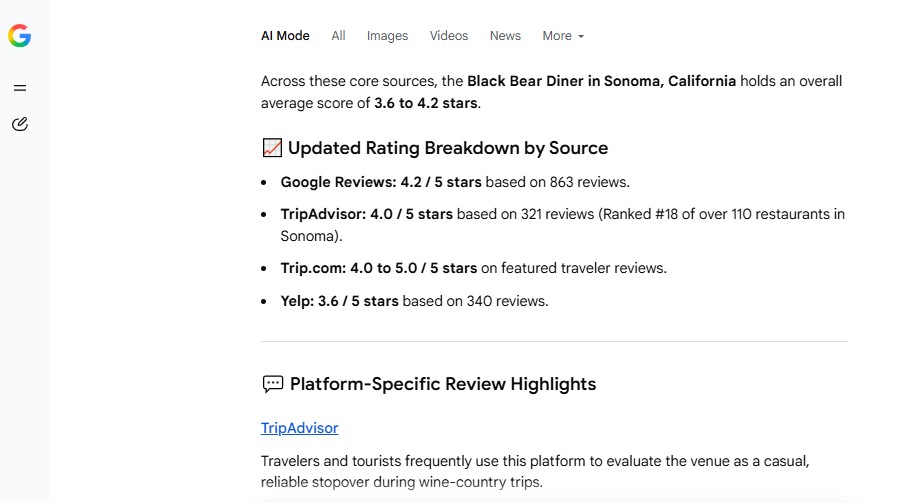
Google AI Mode doesn’t only show reviews from your Google Business Profile. It pulls from multiple sources.
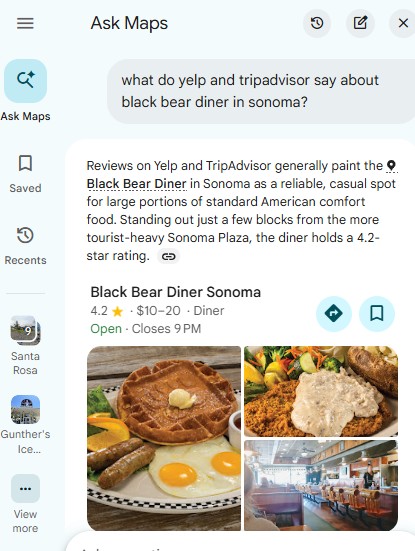
Similarly, the very handy Google Ask Maps can pull review content from a variety of platforms:
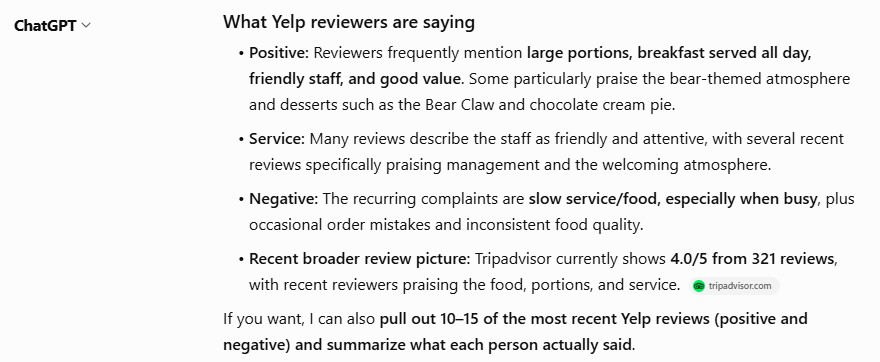
ChatGPT has recently partnered up with Yelp to get access to their massive review database, as well as showing review sentiment and ratings from Google Business Profiles:
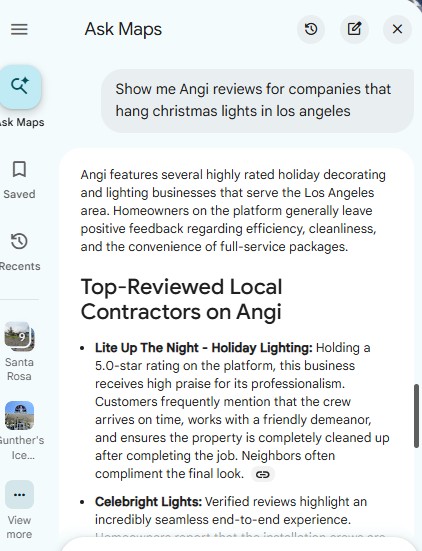
And if there are industry-specific reputation platforms in your vertical (like Angi for contractors or ZocDoc for medical practitioners), you can expect conversational AI tools to cite this content for their users:
Your Task: Don’t only focus on Google Business Profile reviews. Create review request templates for each of the platforms (except for Yelp!) on which consumers rate brands in your industry. Vary your requests to build up your reputation on each of these sites. Yelp is an edge case in that their policy forbids business owners from asking for reviews. To earn more reviews on Yelp without violating guidelines, publicize your profile and individual reviews there on your website, your social channels, and in-store signage. This increases awareness of your presence on the platform so that active Yelpers know they can go to their favorite place to review your business.
2) Deepen review request language
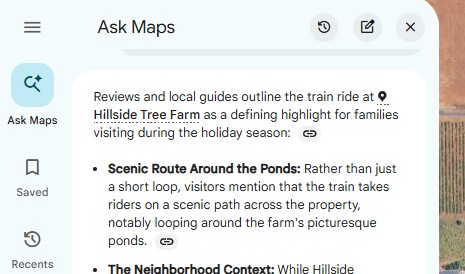
Imagine you’re marketing a Christmas tree farm, but you don’t just offer the experience of cutting down a tree. You’ve invested a lot of time, money, and creativity in also offering train rides through your property, hot apple cider, and other extras. While, of course, you need to earn reviews that mention your entity’s core phrases (e.g. christmas tree farm in X city), you also want your reviewers to mention the amenities that make you stand out from local competitors:
Conversational AI tools like Ask Maps, Google AI Mode, and ChatGPT are training the public to be able to drill down to highly specific intents. Consumers are no longer stuck with trying to access information by simple keyword phrases like “Christmas tree farm near me”. Now, they can write a prompt like:
- “Show me a Christmas tree farm that’s open today and has extra fun things for families like trains, hot apple cider, a gift shop, etc.”
- “Is there a cafe near me that offers vegan holiday coffee drinks and has a quiet, cozy atmosphere for a small group?”
- “Which restaurants near me are open on Thanksgiving and have a gluten-free menu and are family friendly?”
You want reviewers to mention as many of your business’ attributes as is possible so that AI tools have the evidence they need to show your brand as a good match for diverse, specific intents.
Your Task: Don’t just ask customers to review you. Create review request templates that ask for feedback on particular aspects of what your business is, does, or offers. This can include your products, services, atmosphere, amenities, policies, and guarantees. This will take you from merely being a “Christmas tree farm” to being the one with “train rides”, “hot cider”, and “a holiday gift shop” because your reviewers vouch for these features.
3) Audit basic listing details for holiday accuracy
The holiday shopping season is critical to the financial status of so many businesses. However, extra public attention to your business in the fourth quarter of the year also increases the risk of permanent reputation damage if you receive negative reviews because customers were misled and inconvenienced by inaccurate online information.
If your name has changed, your business has moved to a new location, you have a new phone number, you’ve changed your standard hours of operation, or have special holiday hours, your digital footprint needs to reflect this so that AI tools can pull accurate information.
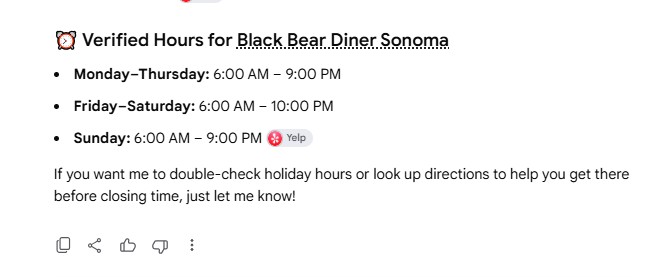
Your Task: Do a pass-through of your local business listings across all the major platforms and double-check that all of the following elements are correct:
- Name
- Address
- Phone numbers
- Website address link
- Social media links
- Hours of operation, including seasonal/holiday hours
- Map pin placement
- Forms of payment accepted
- ADA accessibility attributes
Correct any errors as soon as possible to avoid disappointing the extra customers you get at this time of year.
4) Piggyback on your niche’s highest-profile publishers
A dominant theme from the marketing world in 2026 is that AI prominence leans heavily on brand fame. If you’re running a small business or a startup that has yet to invest much in brand building, take note of this case study conducted by Local SEO Guide founder, Andrew Shotland:
“Brand mentions on third-party sites seem to have an outsized effect on your visibility in LLMs, and not just the best third-party sites – any third-party site, but on the best ones, it seems to have a really interesting effect. We were working with a startup client that really doesn’t have a brand anyone has ever heard of, and last week they got featured in Business Insider and Reuters, and we could see that the prompts we’re tracking for them in LLMs, in ChatGPT, Perplexity, etc., went up about 400% over the last week…and their Google organic traffic has gone up about 150% in a week.”
Your business may or may not be the right fit for a publication like Business Insider, but every vertical has its highest-profile digital publishers. If you’ve never investigated earning mentions on third-party sites before, the identities of these publishers may surprise you. For example, here’s a holiday vacationer asking Google AI Mode what the coziest wineries are in Sonoma County:
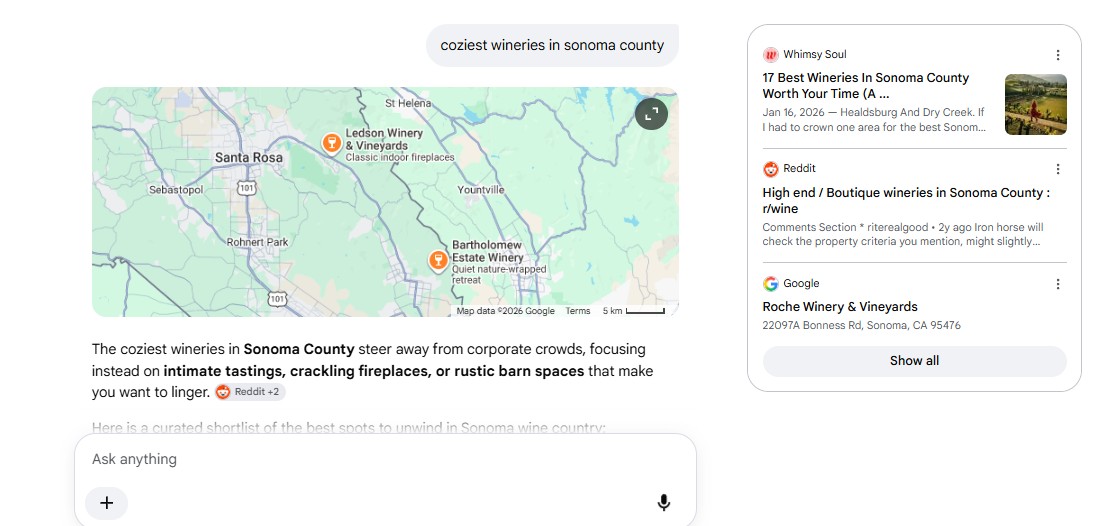
The top-cited source in AI Mode for this prompt is a publication I’ve never heard of before called “Whimsy Soul”:
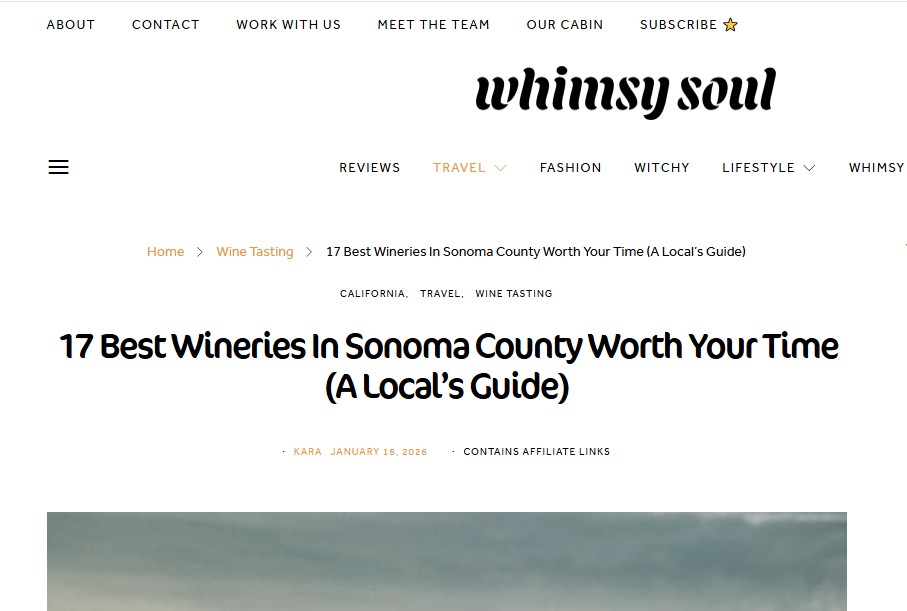
On further investigation, Whimsy Soul appears to publish lots of “best of” lists with affiliate links. I don’t know anything about the quality of this publication, but if I were marketing a winery, I’d want to find out how to get mentioned on it because AI Mode obviously favors it.
Your Task: Investigate the sources that are coming up in AI tools for the products, services, and attributes you want to be famed for. Make a list and then research how your business can get mentioned on dominant publishers. In my example, businesses may be having to buy visibility like paid advertising, but this is not always the case.
Earning unstructured citations is a foundational marketing practice for all local businesses. These typically consist of unpaid mentions of your brand on any website other than a formal local business listing directory. These third-party mentions have risen to the top of the heap of signals that influence AI visibility, and you can earn them via a variety of activities including, but not limited to:
- Outreach to local publishers such as newspapers, bloggers, and lifestyle/tourism magazines with good stories
- Philanthropic endeavors such as sponsoring local teams, organizations, events, and causes
- Hosting charitable drives and donating proceeds to worthy recipients
- Hosting or sponsoring local or industry conferences, workshops, and other events
- Making guest appearances on podcasts, video channels, and local radio and TV stations
- Holding contests or other events that earn social media mentions
- Membership in local and industry associations
Map out your local and industry opportunities to earn third-party mentions via newsworthiness, community involvement, and networking. Earn as many unstructured citations as you can over the next few weeks to ensure that AI tools have plenty of sources to cite when users are looking for a brand like yours that meets specific requirements.
5) Use photos to showcase the holiday experiences you offer
If you count on a seasonal uptick of sales at this time of year, be sure that both your Google Business Profile image section and your reviews act as a photographic record of what consumers can expect from you as part of the holiday experience you offer.
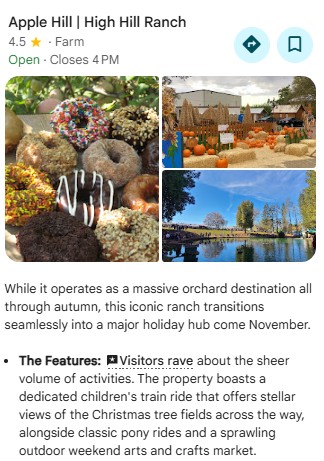
I don’t think that either ChatGPT or Google AI Mode are ideal for image-related searches, because they have multiple restrictions on the imagery they can pull. Nevertheless, both of these tools + Ask Maps do highlight and link to image content on Google Business Profiles, Yelp listings, etc. You want as many photos as possible of your holiday menu items, amenities, decor, special features, sales, etc.
Also, before Google sunsetted its GBP Q&A feature, one of the FAQs I documented there was from people asking whether a variety of businesses were open on specific holidays. If being open on days like Thanksgiving, Christmas, New Year’s Eve or New Year’s Day sets your business apart, I’d recommend creating a hand-written sign you photograph or a digital graphic stating that you are open for these holidays, and uploading it to your Google Business Profile.
Your Task: Get the best photographer on your team to document anything about your business that makes it a good experience for holiday shoppers/diners/customers. Upload these images to your Google Business Profile and other business listings. Showcase them on your social channels. Create a page on your website dedicated to holiday experiences that includes a gallery of these photos. Hang in-store signage letting customers know they are welcome to take pictures, and that you’d love them to include photos in their reviews.
6) Put YouTube to work in your AI search marketing plan
In the same Andrew Shotland interview with NearMedia that I linked to a moment ago, he shares his study with rank tracker, Nozzle which revealed that YouTube is the #2 most-cited domain in local AI answers.
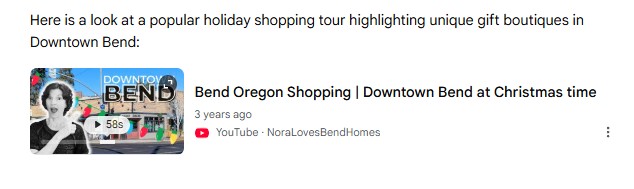
Despite the fact that YouTube launched over two decades ago, many brands have yet to build a channel there. There’s a good reason for this: video content takes time to produce. But there’s also an aspect of this that many small business owners don’t understand: your video content doesn’t need to look like it was produced in Hollywood to communicate an appealing message. In fact, the more authentic your videos look, the less likely they will be written off as AI-generated slop. Given the prominence of YouTube results in AI answers to local-intent queries, not having a YouTube channel is now a major gap in your marketing playbook.
Your Task: Film a set of video shorts showcasing the holiday experiences you offer customers. This could include:
- Signs showing that you are open on specific holidays
- Holiday decor, including window displays, selfie displays, and general atmosphere
- Holiday menu items
- Charitable drives you host, such as toy or food basket drives
- Special events, such as sales, tree-lightings, caroling, entertainers, and live music
- Special inventory and offers, such as seasonal food and drink, weather-preparedness products and services, holiday contests, and coupons
Good cell phones take quite good videos these days, and nearly any local business can benefit from YouTube content that makes products, services, and amenities more relatable to prospective customers.
7) Protect your community from the review spammer Grinch
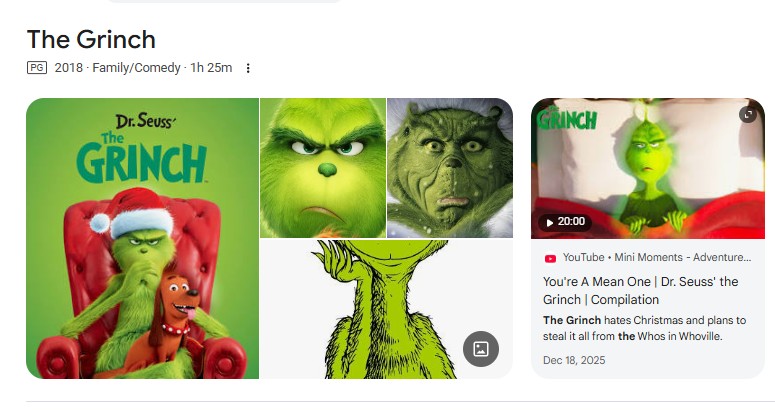
There are always bad actors who are trying to wreck the festive season and the rest of the year for unsuspecting people with review spam designed to manipulate AI, search engine results, and the public. Every sale you lose to a spammer hurts not just your bottom line, but the community you serve. The Transparency Company (part of the GatherUp family of brands) finds that consumers are suffering $300 billion in annual economic harm in the home services, legal, and medical sectors, alone.
Trustworthy local businesses adhere to review platform guidelines and legal codes that prohibit deceptive practices, but unfortunately, most industries have a serious problem with review fraud. Holiday shoppers and travelers shouldn’t have to worry that they are being tricked into patronizing fraudsters.
Your Task: In addition to playing by the rules and manually reporting suspicious review content to review platforms, you can take a stronger stance against review spam for the sake of your community by earning your Transparency Certificate. This is something quite new and badly needed in the local business arena. Now you can apply for a certificate, undergo a robust review authenticity audit, agree to ongoing monitoring of your reviews for guideline and legal compliance, and be awarded your Transparency Certificate and badge. Over time, customers will learn that your business can be trusted because it has earned this certified status, which is also discoverable by AI agents.
Make it a good Q4
All 7 of the tactics we’ve reviewed today have a common denominator: they take into account the experiences your prospective customers are having in conversational AI and search environments in the run-up to the holidays. Good marketing comes down to building a brand that is thoughtful in ensuring that consumers find helpful and trustworthy answers in these interfaces, no matter how diverse and specific their needs.
Be more intentional about how and where you ask for reviews. Ensure your basic data is delivering satisfaction instead of disappointment. Contribute to your community. Use your creativity to create multimedia discovery paths. Clean up spam in the cities and towns you serve, and emerge as a trusted local resource. There’s good sense behind each of these activities, and all have the power to make this a good Q4 for your business!
Frequently asked questions
Does Google AI Mode only show reviews from Google?
No. Google AI Mode and Ask Maps pull review content from several platforms, including Yelp, TripAdvisor and Trip.com. ChatGPT has partnered with Yelp to use its reviews. Industry sites like Angi and ZocDoc get cited too, so it pays to build reviews beyond your Google Business Profile.
Can I ask customers to leave reviews on Yelp?
No. Yelp’s policy forbids business owners from asking for reviews. Instead, feature your Yelp profile and individual reviews on your website, on social channels and on in-store signs. That way, active Yelpers know you’re there and can review you on their own.
How do I get reviews that mention specific things about my business?
Ask for them. Write review request templates that ask about particular parts of your business, like a product, an amenity, your atmosphere or a policy. When reviewers mention those details, AI search tools have the evidence they need to match you to very specific requests.
What should I check on my listings before the holidays?
Check your name, address, phone numbers, website link, social media links, regular and holiday hours, map pin placement, accepted payment methods and accessibility attributes on every major platform. Wrong details during the busiest season can turn into negative reviews.
Does YouTube help local businesses show up in AI answers?
Yes. A study by Andrew Shotland and the rank tracker Nozzle found that YouTube is the second most-cited domain in local AI answers. Short, authentic phone videos of your holiday decor, events, menu items and offers are enough to get started.
Want help turning your reviews into holiday visibility in AI search? Reach out for a conversation and a demo of GatherUp’s reputation management solutions today.